


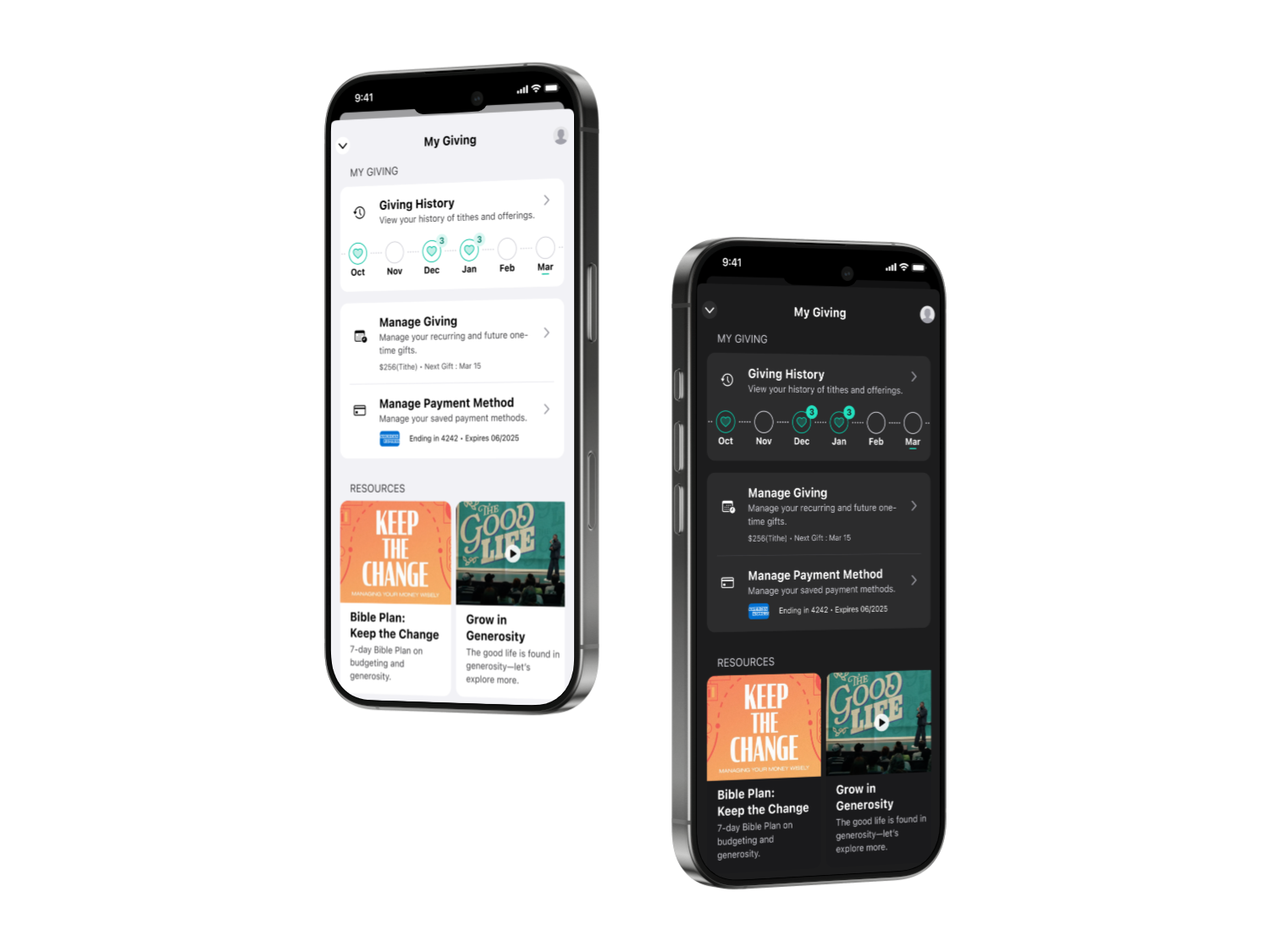
Giving through the app makes up about 90% of Life.Church's income, so even a small change carries real weight — and a broad redesign risked disrupting a habit that was already working for most givers. Before touching the dashboard, I pushed to build the redesign on evidence instead of assumptions.

Because so much giving happens through one familiar flow, a broad redesign could create disproportionate operational and behavioral risk.

Many non-recurring givers already intended to give. The opportunity was to help them recognize their pattern and act at the right moment.

Support follow-through without adding pressure, guilt, or unnecessary disruption to established habits.
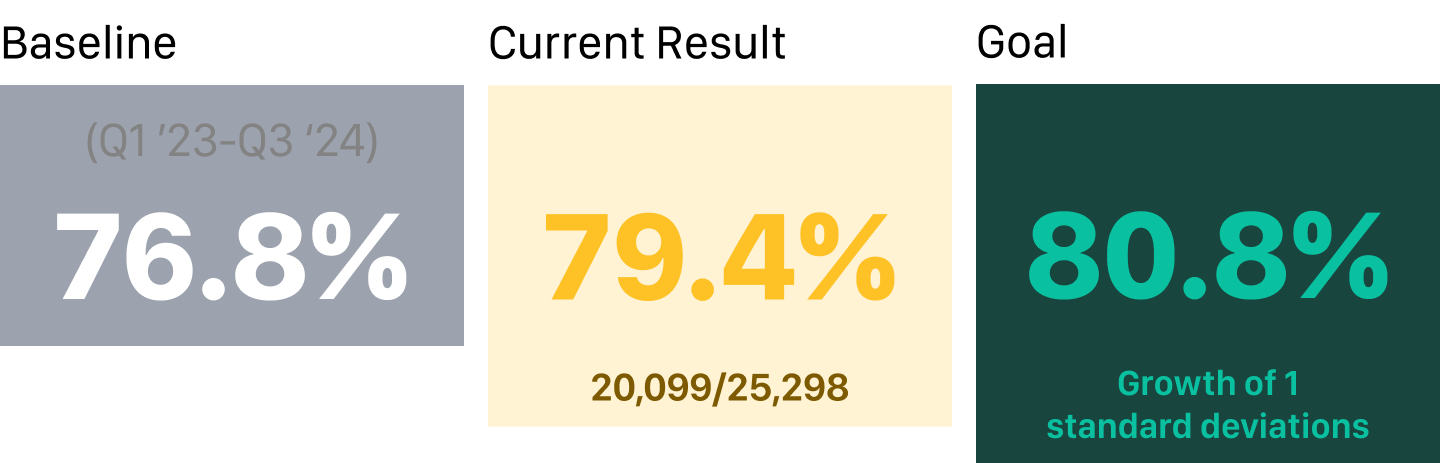
According to data in the past, we set the goal at 80.8% and moved the team past anecdotal feedback into focused discovery research — quantifying the real problem before designing a single screen.





We surveyed non-recurring givers and cross-referenced six months of in-app behavior. The pattern held across both: people didn't need more reasons to give — they needed help remembering they already meant to.
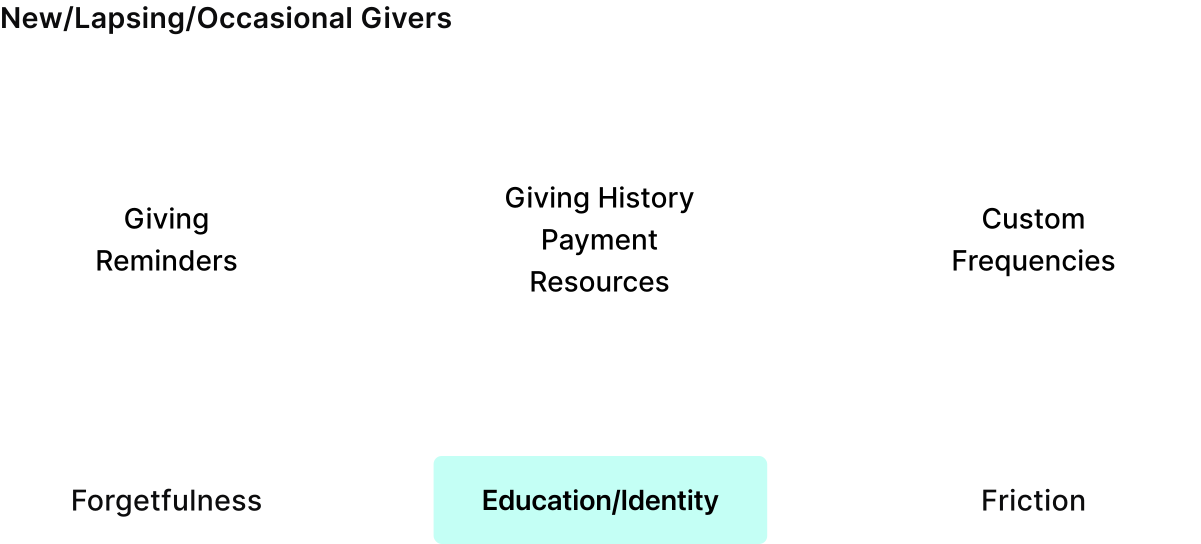
Our diverse user base meant that a one-size-fits-all solution for increasing consistency was impossible. Therefore, our focus shifted entirely to segmentation. We needed to categorize givers based on their behavior, understand what truly motivates them, and match that to the specific friction point they needed solved.
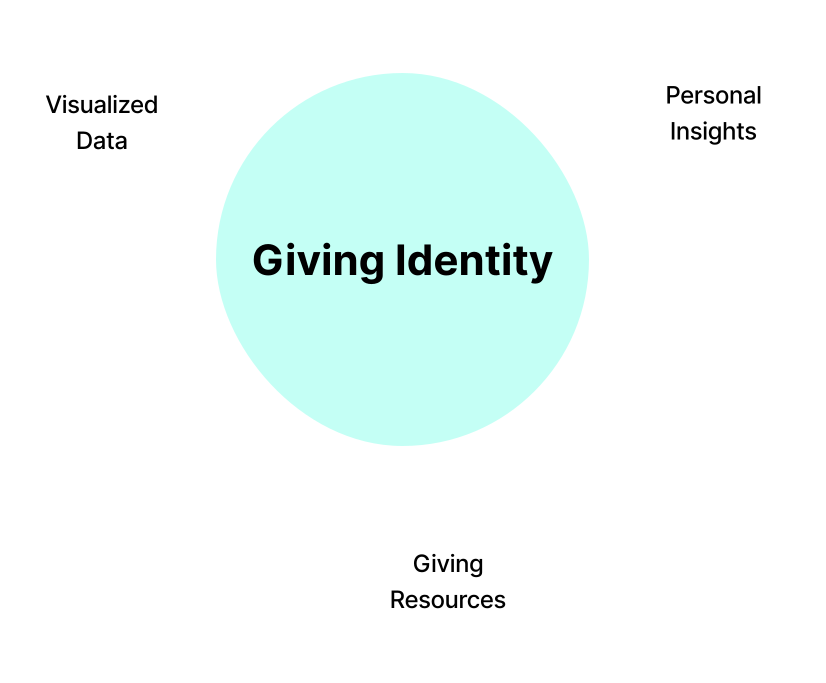
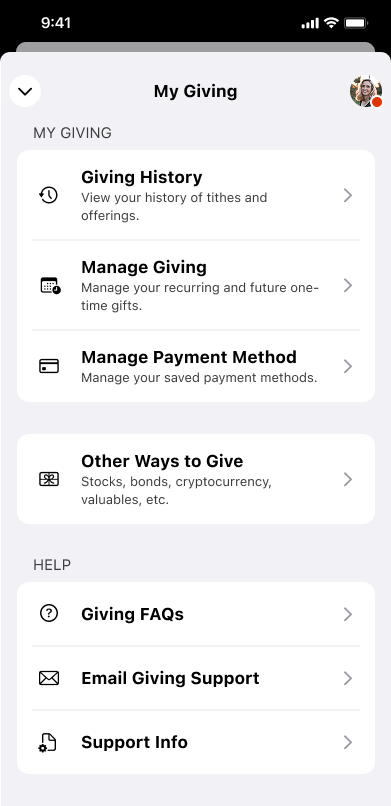
Research pointed to two promising needs: visibility into past giving and support for remembering the next gift. My PM and I initially explored a new dashboard that could bring history, payment methods, resources, and reminders into one place.
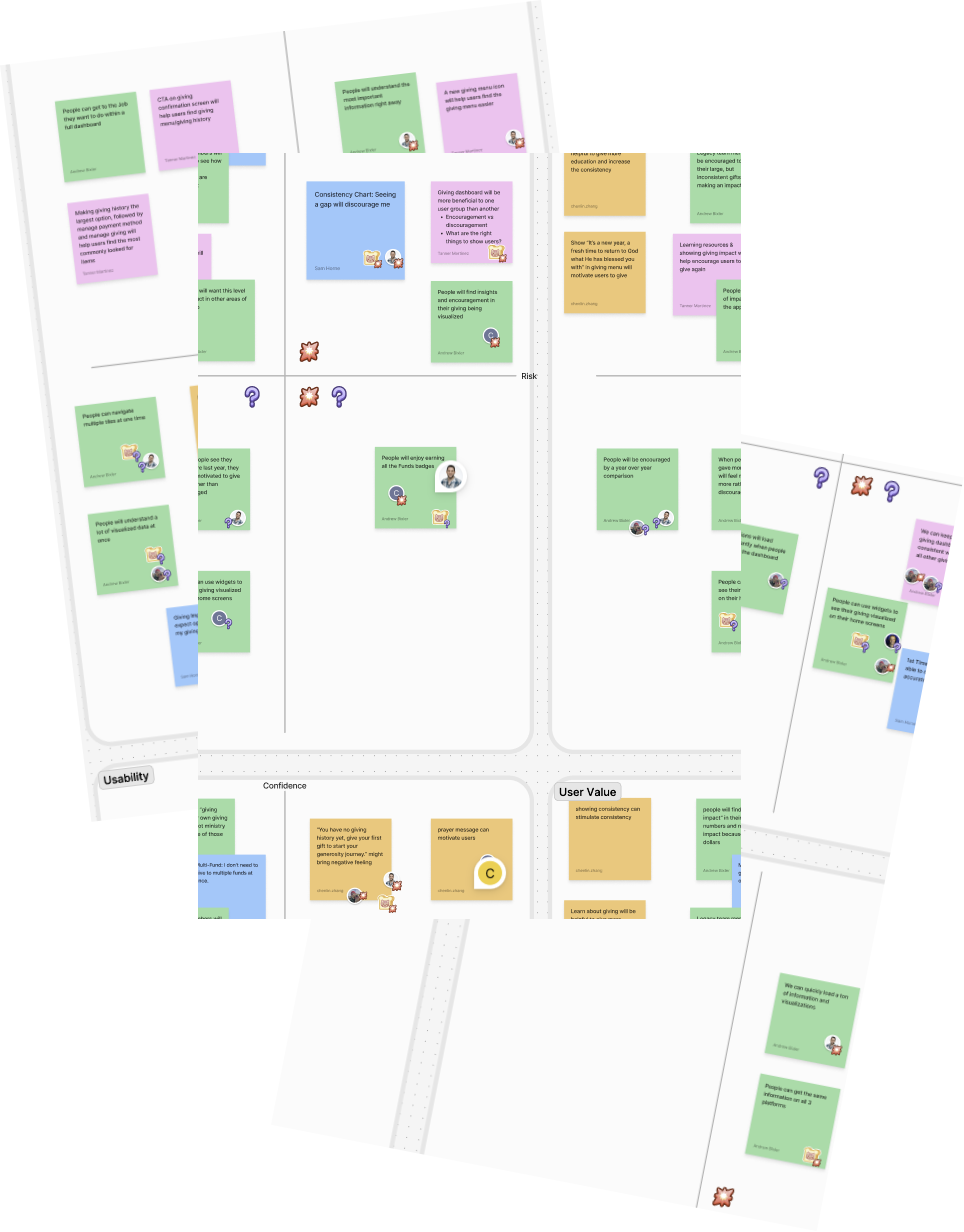
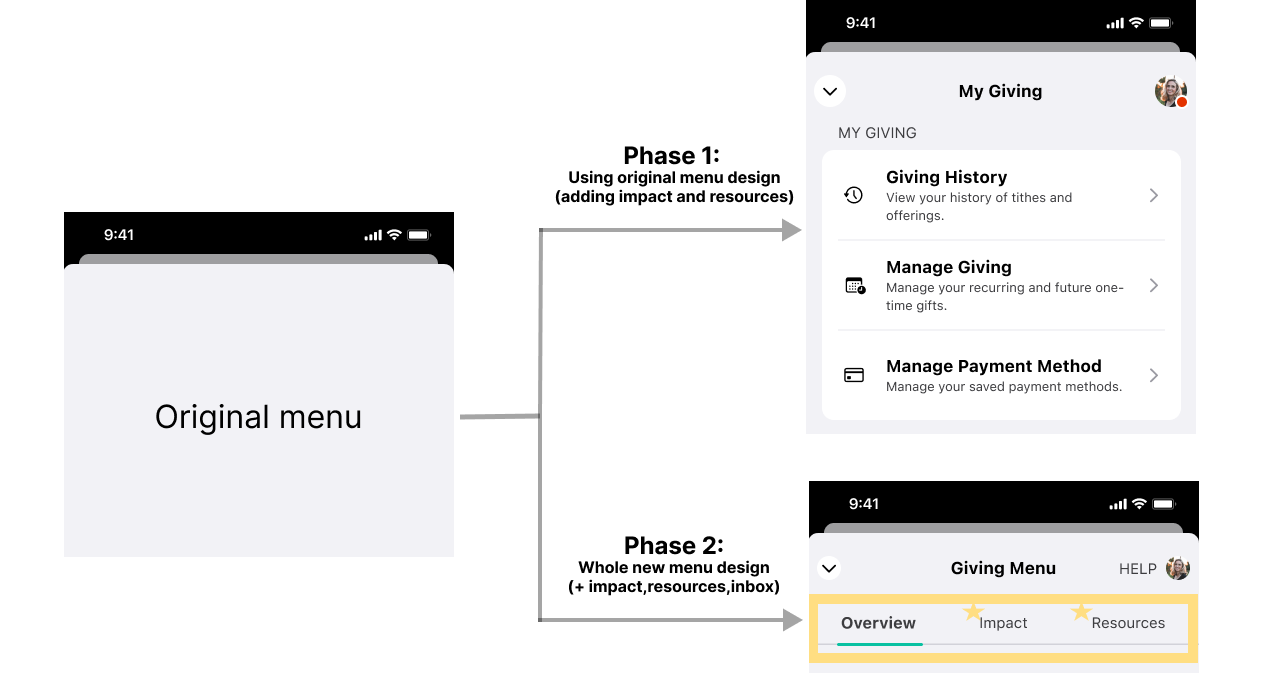
Midway through the work, leadership raised a valid concern: changing the entire giving menu at once could disrupt established habits and introduce unnecessary operational risk. I worked with the PM and engineers to separate the high-confidence user needs from the lower-confidence dashboard redesign, then recommended a phased release.
Phase 1 — Ship giving-history improvements and reminders inside the familiar experience. Use in-app cards and guides to introduce the new workflows.
Phase 2 — Use adoption and behavior data from the first release to decide whether a broader dashboard redesign is warranted.


With the dashboard held constant, I focused the design on two decisions: how to make giving patterns easier to interpret, and how to support reminders without creating pressure.
I evaluated each concept against three criteria: comprehension, respect for giver autonomy, and feasibility within the existing experience.

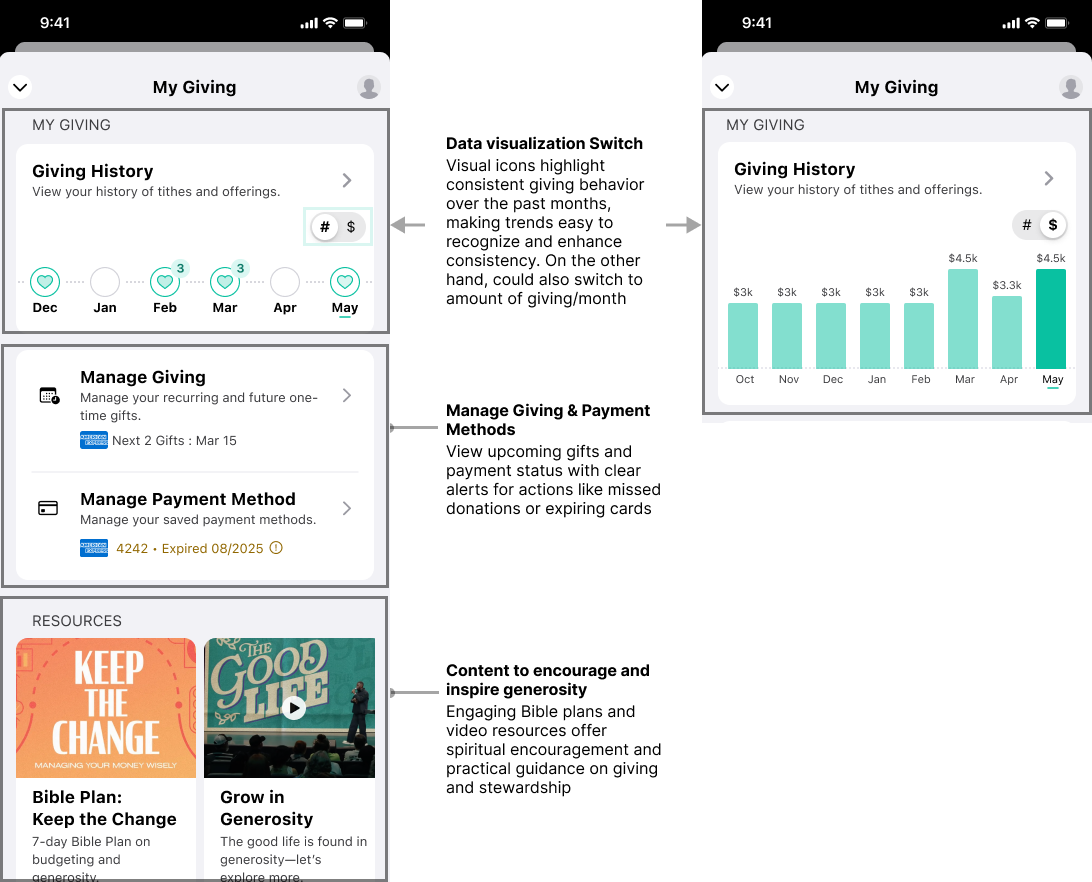
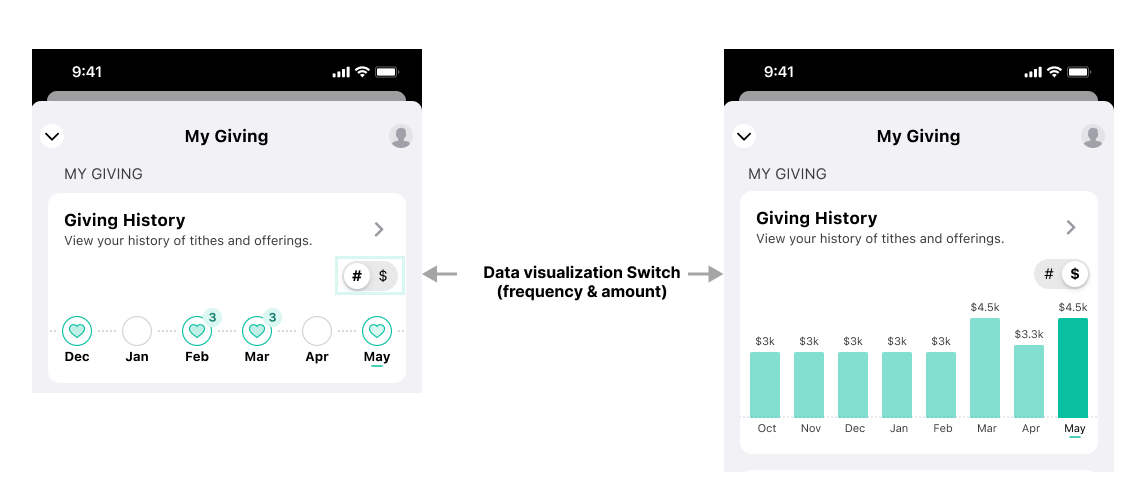
Instead of a flat list of past gifts, the history view surfaces three signals givers already cared about: giving frequency, how it compares to their own trend, and any gifts that may have been missed.
Prototype testing and in-person interviews revealed that users did not reliably recognize the fund icons. The visual categories added ambiguity and made the history harder to scan.
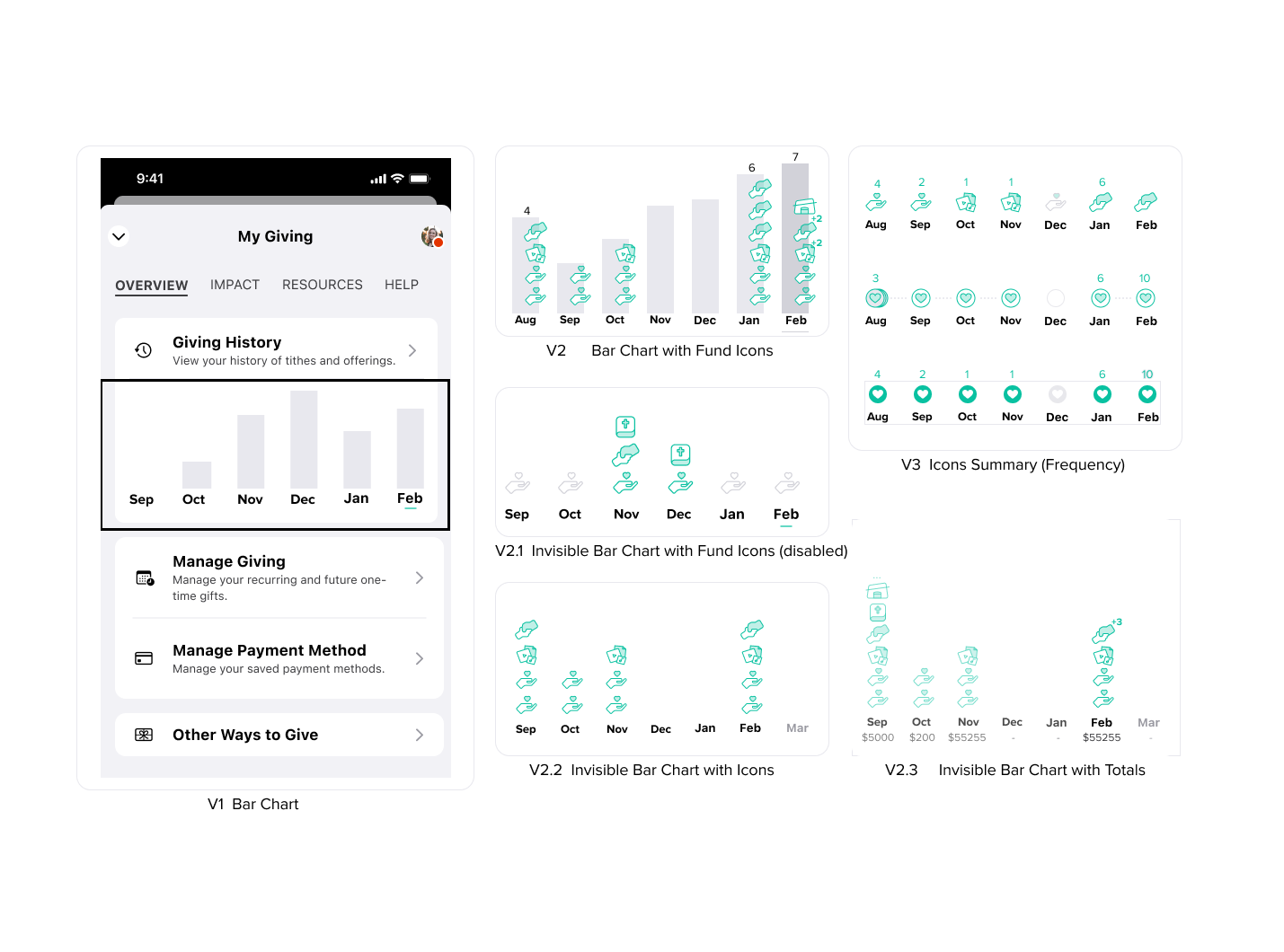
I shifted the visualization toward frequency and chronology—the information people needed to understand their pattern. We also reduced emphasis on missed periods so the experience could inform without creating guilt.
A reminder could improve follow-through, but an aggressive default risked feeling coercive. Giving people control over timing and frequency allowed the feature to support an existing intention without manufacturing urgency.

I tested a clickable prototype and fake-door experience with 30 existing users in one week. The findings helped us refine comprehension and navigation before handoff.
1. 56% of users who enabled reminders gave within the reminder period.
2. $485K additional giving in the first 4 months


Thanks for reading! If you're curious about my other work, check out "WORKS" — or feel free to reach out anytime.